
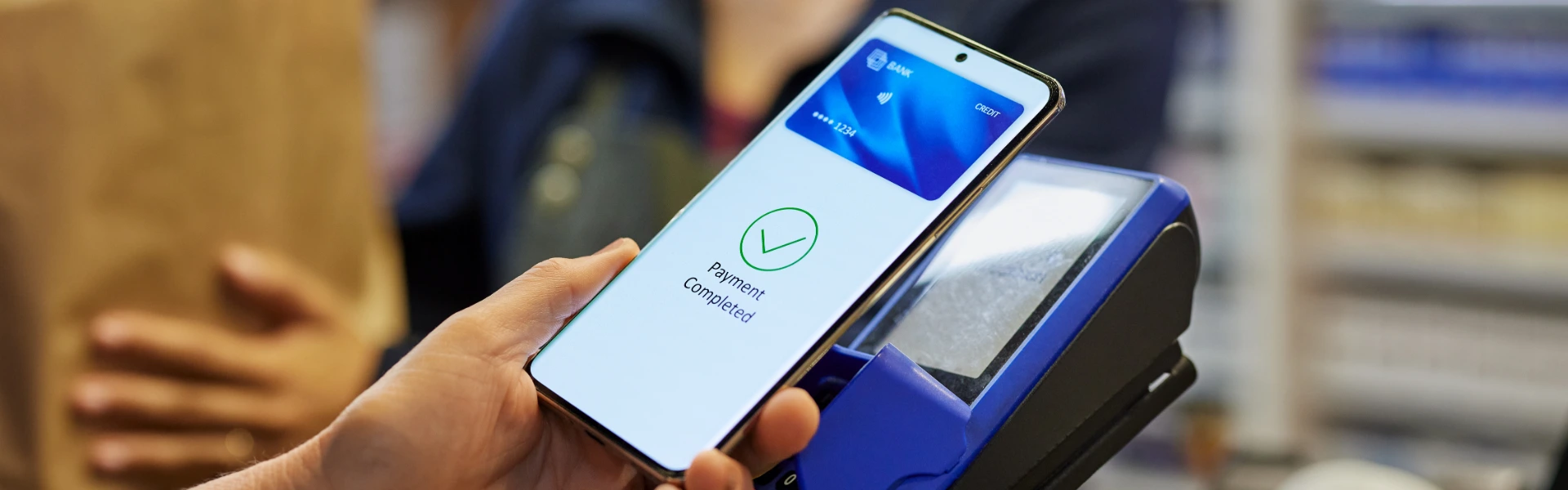
If you have been paying for your groceries, bills, and chai with UPI for the past few years without paying charges on UPI transactions, that ease of transacting is now being questioned by a bill passed in Parliament. And the social media reaction, somewhere between mild panic and full-scale outrage, is understandable.
Here is the thing, though. Reading the actual bill rather than the headlines around it produces a much more nuanced picture than “UPI is about to charge you money.” The truth is complicated. The policy direction is significant. And the implications for consumers, merchants, and investors in the digital payments space are all worth understanding properly.
Let us go through this from the beginning.
Table of Contents
- 1How UPI Became Free in the First Place?
- 2What Parliament Just Passed and What It Actually Does?
- 3What Is a Merchant Discount Rate and Who Would Actually Pay?
- 4What the RBI Governor Said and Why His Words Matter?
- 5What Happened to the Government's Earlier Denial?
- 6What This Means for Consumers Right Now?
- 7What Does This Mean for Investors?
- 8In Light Of These Points
How UPI Became Free in the First Place?
To understand what changed, you need to know what was there before.
Before January 2020, UPI transactions did carry a fee. NPCI had set a Merchant Discount Rate, or MDR, of up to 0.30% of transaction value for UPI person-to-merchant payments. Merchants who accepted UPI paid this fee to their bank or payment processor, similar to how credit card swipe fees work.
In January 2020, the government made a policy decision to waive MDR entirely on BHIM-UPI and RuPay debit card transactions. The legal mechanism was a combination of two provisions. Section 269SU of the Income Tax Act required all businesses with annual turnover above Rs 50 crore to mandatorily offer BHIM-UPI QR codes and RuPay debit cards as payment options to customers. And Section 10A of the Payment and Settlement Systems Act 2007 made it illegal for any bank or payment system provider to charge, either directly or indirectly, for transactions made through those mandated digital payment modes.
The effect was a complete legal ban on MDR for UPI. Banks and payment companies could not charge merchant fees. No MDR. Zero cost.
To compensate, the government created an incentive scheme for banks and PSPs, essentially paying them to keep the infrastructure running at zero MDR. The numbers involved were substantial: the government paid Rs 1,389 crore in FY22, Rs 2,210 crore in FY23, and Rs 3,631 crore in FY24 under this scheme.
The result was explosive growth. UPI became the backbone of India’s digital payment economy. Transactions reached a record Rs 29.9 lakh crore in value in July 2026 alone, with 23.66 billion transactions in that single month. By making UPI free, India created the world’s most widely used real-time payments network.
What Parliament Just Passed and What It Actually Does?
Finance Minister Nirmala Sitharaman introduced the Taxation and Other Laws (Amendment) Bill, 2026 in the Lok Sabha on August 4, 2026. The Lok Sabha passed the bill on August 6, 2026, by voice vote without debate, when the House resumed proceedings at 2 PM following an earlier recess.
The bill amends Section 10A of the Payment and Settlement Systems Act 2007, along with the Income Tax Act 2025 and Finance Act 2026. But the key change, the one creating all the noise, is what it does to the legal prohibition on UPI payment gateway charges.
The old language said no bank or payment system provider could impose any charge on electronic payment modes prescribed under Section 269SU of the Income Tax Act. This was a hard ban written into the law itself.
The new language says no bank or system provider shall impose a charge upon a person making or receiving payment by using one or more electronic modes of payment as may be notified by the Central Government.
Spot the difference. The exemption from charges is no longer a blanket legal protection written into statute. It is now a list of modes that the Central Government will notify by executive order as being exempt. Modes not on that notification list can lawfully attract fees.
In plain terms: the legal ban on UPI payment gateway charges has been lifted. UPI is not yet chargeable. But charging for UPI is no longer prohibited by law. The government now has the power to decide, through a notification, which payment modes and which categories of transactions remain free, and which can attract MDR.
What Is a Merchant Discount Rate and Who Would Actually Pay?
MDR is a fee that merchants, not consumers, pay to their bank or payment processor for accepting digital payments. When you pay by credit card at a store, the store pays roughly 1.5 to 2% of the transaction value to the bank that issued your card and the payment network. You, as a consumer, pay nothing directly. The merchant absorbs the cost.
For UPI, the debate around restoring MDR specifically targets large merchant transactions, not small kirana shops and not consumers. The emerging framework being discussed, though nothing is finalised yet, involves:
A potential MDR on UPI transactions above Rs 2,000, only for person-to-merchant transactions, not person-to-person transfers. Small merchants would remain protected. Consumers would remain protected. The fee, if any, would be borne by large merchants, businesses with significant turnover that can absorb the cost.
Even there, the numbers being discussed are small. A fee of 5 to 7 basis points, which is 0.05 to 0.07%, on large-merchant UPI transactions above Rs 2,000 is what analysts are modelling. That is very different from a 1% fee on every UPI transaction you make.
Grow your wealth with Bonanza
What the RBI Governor Said and Why His Words Matter?
On August 5, 2026, a day after the bill was introduced, RBI Governor Sanjay Malhotra was asked about UPI charges at the post-Monetary Policy Committee press conference.
His response was careful, honest, and worth quoting directly. “It is very premature right now. The government is still carrying out the amendment. The costs have to be paid by someone. We all want this public infrastructure to continue to strengthen and become more efficient. That’s our primary focus now. Let’s wait and watch for further developments on this.”
He went further: “It is the consumer who pays, in one form or another. It may not be the same consumer. It may be the general economy, which you don’t directly get to see.”
That last line is the most important thing said on this subject so far. The Governor is pointing to a fundamental economic reality: running India’s UPI infrastructure is not free. It costs money to build, maintain, secure, and expand. Right now, the cost is being absorbed partly by the government through incentive payments and partly by banks and payment companies that operate at zero MDR. In the long run, a system where the cost has no sustainable revenue source to cover it is a system that struggles to invest in its own improvement.
The RBI’s position, as Malhotra made clear, is that the goal remains making digital payments accessible, affordable, safe, and sustainable. But sustainability requires someone to pay for the infrastructure. Who that is, and how, is what the government is now working out.
What Happened to the Government’s Earlier Denial?
This question deserves a direct answer.
In June 2025, the Finance Ministry called speculation about MDR charges on UPI payments”completely false, baseless, and misleading.” Just over a year later, the government passed a bill that opens the legal door for exactly those charges.
The reconciliation between these two positions is that the June 2025 denial was about the immediate imposition of charges, which was never the government’s plan at that point. The August 2026 bill is not an immediate imposition of charges either. It is the creation of a legal framework that makes future charges possible without requiring parliamentary legislation each time.
So the government technically never lied. But the direction of travel is now unmistakably clear. From a legal standpoint, the barrier to charging for UPI has been removed.
What This Means for Consumers Right Now?
Nothing changes today.
- UPI remains free for consumers and small merchants. Person-to-person transfers will remain free under any proposed framework. The UPI limit per day has not changed. There are no new UPI payment charges at this time.
- The bill has been passed in the Lok Sabha. It still needs to go through Rajya Sabha and receive Presidential assent to become law. Even after that, the charges will only actually be introduced when the Central Government issues a specific notification listing which payment modes are no longer exempt. No such notification has been issued.
Until that notification comes, the daily UPI payment experience remains unchanged. The charges on UPI transactions are a future policy decision, not a present reality.
What Does This Mean for Investors?
This is where the story becomes genuinely interesting from a portfolio perspective.
- Indian digital payments infrastructure stocks and fintech companies, both listed and unlisted, have been operating in a world where UPI generates zero direct revenue. Payment companies built their business models around transaction volume, software subscriptions, credit products, and financial services, not payment fees. That model has worked, but it has also constrained how investors value these businesses.
- If MDR of even 5 to 7 basis points is introduced on large-merchant UPI transactions above Rs 2,000, the revenue math changes significantly. Jefferies has estimated that MDR on UPI would add somewhere between $525 million and $1.05 billion to annual revenues across the payment company ecosystem. For a sector that has been valued on non-payment revenue streams, a payment revenue line of that scale is a material new factor.
- PhonePe, which paused its IPO process in March 2026, had been targeting a valuation of $12 to $15 billion. Its entire core payment business has generated zero MDR revenue since 2020. A small MDR on large-merchant transactions makes the IPO business case materially stronger and the valuation arguably more supportable.
- For Paytm, which is listed on Indian exchanges and has been working to rebuild its business model after regulatory difficulties, a UPI MDR creates a new revenue stream on an asset it already owns, the merchant payment infrastructure built over years.
- Banks like HDFC Bank, ICICI Bank, SBI, and others that issue UPI through their apps would also benefit, since MDR, when it comes, will flow through the banking system. Banks with large merchant-acquiring relationships are best positioned to capture this incremental fee income.
For investors in Indian fintech broadly, the legal change matters because it removes the single biggest structural overhang on monetisation of the payments business. Even if MDR is small and applies only to a subset of transactions, the removal of the legal prohibition signals that the government now views payments as a sector that needs sustainable economics rather than indefinite subsidisation.
In Light Of These Points
The Parliament Monsoon Session passed a bill that does not charge you for UPI today. But it removes the legal prohibition that prevented charging for UPI tomorrow. That is a meaningful distinction, and it is the one that matters for understanding what just happened.
Consumers do not need to panic. Small merchants do not need to panic. But the direction is clear. India’s government has accepted, at a legislative level, that UPI cannot remain entirely free indefinitely. Who pays, how much, and for which transactions is the question now being answered through policy and notification.
For investors watching India’s digital payments space, this is the moment the investment thesis on payment infrastructure companies shifted. Not because charges are here now. Because the legal framework that made charging impossible is no longer there.
At Bonanza Wealth, we track policy developments like this closely because they reshape sector economics in ways that compound significantly over three- to five-year investment horizons. If you want to understand how the changing UPI MDR landscape affects your investment positioning across fintech, banking, and digital infrastructure plays, our team is here to help you think it through clearly.
Blog Disclaimer:
The stocks, companies, or financial instruments mentioned in this blog are for informational purposes only and should not be considered as investment recommendations. It is advised to consult with your financial advisor before making any investment decisions. Investment in securities markets are subject to market risks, read all the related documents carefully before investing. Investors are strongly encouraged to carefully read the risk disclosure documents prior to participating in market-related investments or trading activities. Due to the volatile nature of financial markets, no guarantees can be made regarding investment returns. Bonanza Portfolio Ltd. does not offer any assured returns on market-linked securities. Please note that past performance of stocks or indices is not indicative of future results.
You can also join our community at LinkedIn, Instagram, and Twitter to stay updated.
Latest Posts
-
 11 Aug 2026
Why Every Vehicle Owner Should Know About the Supreme Court’s New Insurance Proposal?
-
 10 Aug 2026
UPI Charges Are Coming? What The New Parliament Bill Actually Means For You
-
 06 Aug 2026
Stock Market Timing Has Changed From 03 August: All You Need to Know
-
 04 Aug 2026
Emergency Fund: The 3-6-9 Rule Every Investor Should Know!
Related Posts
-
 03 Aug 2026
India Semiconductor Mission 2.0 and the Shift From Paper Plans to Commercial Production
-
 30 Jul 2026
India Bonds on Edge: What the Market Is Really Watching For?
-
 28 Jul 2026
NITI Aayog’s Investment Friendliness Index 2026: All You Need to Know
-
 23 Jul 2026
Pharma Tariffs: A New Era of Protectionism – Impact on Indian Pharmaceutical Companies and the Road Ahead





 Invest Now