
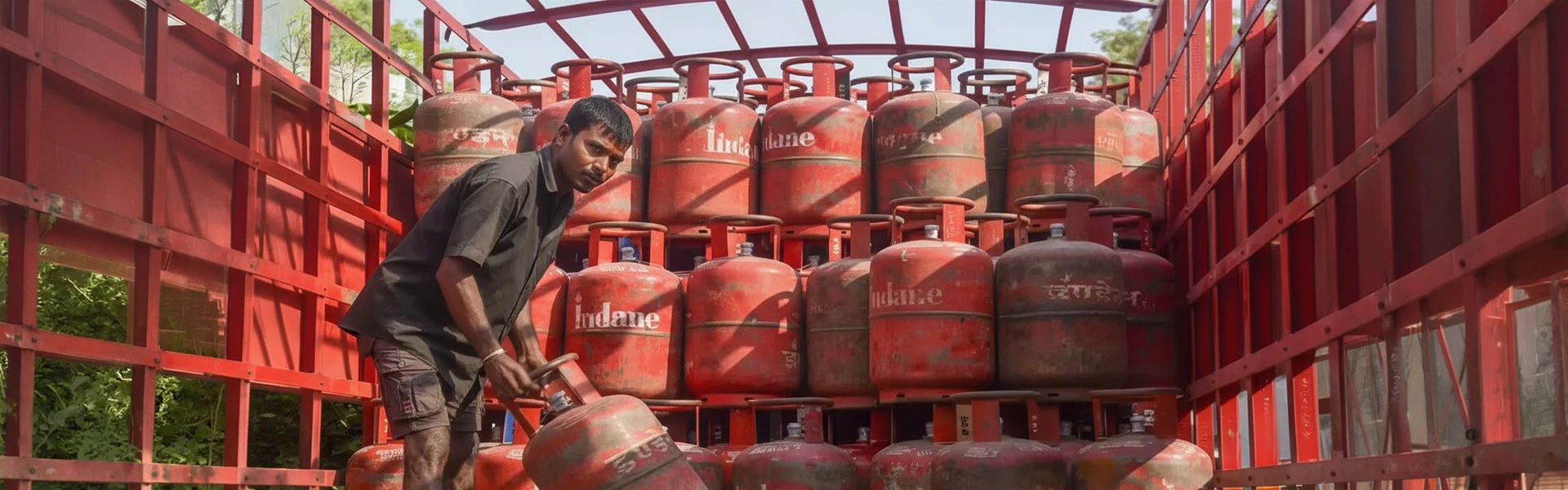
When Amit Kumar Singh from Gurugram booked his cooking gas cylinder a week ago, he expected delivery in two days. Instead, he received silence.
He is not alone. Across India, the war in West Asia has transformed something as basic as cooking gas into a scarce commodity that restaurants are hoarding and households are panic-buying, as LPG prices soar.
When War Affects the World’s Energy Supplies
The trigger was precise. When the Iran Israel US war escalated with strikes targeting Iran’s leadership on February 28, the Strait of Hormuz effectively closed to commercial shipping. This narrow waterway matters because 90% of India’s LPG imports pass through it.
India imports roughly 62-65% of its total LPG requirement, consuming about 31.3 million tonnes annually. In January 2026 alone, imports stood at 2.192 million tonnes while domestic production was just 1.158 million tonnes. This dependence on Middle Eastern suppliers, combined with the Strait of Hormuz blockade, created the perfect supply storm.
The West Asia conflict did more than just disrupt shipping. Iraq cut output from southern oilfields by around 70% while Kuwait declared force majeure, further squeezing global fuel supplies reaching India.
LPG Prices and the Panic That Followed
While the government has tried to keep LPG prices stable, reality on the ground tells a different story. LPG prices in the black market have reportedly surged as panic buying intensified. Long queues formed at gas agencies in Lakhimpur Kheri, Bhopal, and other cities as consumers rushed to secure cylinders amid shortage fears and concerns about potential LPG price increases.
Restaurants bore the immediate brunt. In Chennai, hotels put up notices stating “Due to lack of LPG supply, March 11, 2026 has been declared a holiday.” Mumbai-based restaurant associations warned members were on the “verge of closure” as commercial LPG supply dried up.
Even corporate giants felt the pinch. Infosys restricted food items across campuses to manage the cooking gas crunch triggered by the Iran Israel US war disruptions, while Delhi High Court’s Lawyer’s Canteen switched to serving only sandwiches.
The National Restaurant Association of India issued urgent advisories recommending members trim menus, suspend dishes requiring longer cooking times, and switch to induction cooking wherever possible.
Government Response and Priority Reallocation
Facing a crisis that threatened 330 million households using LPG as primary cooking fuel, the government invoked the Essential Commodities Act to prioritize homes, hospitals, and schools over the 3 million businesses using commercial cylinders.
Under the new Natural Gas Supply Regulation Order 2026, authorities created a priority allocation system. Refineries operated by Indian oil stocks like Reliance and Indian Oil were ordered to stop making petrochemicals and redirect propane and butane toward domestic LPG production instead.
To prevent hoarding, the gap between two LPG bookings increased from 21 days to 25 days. The government also sourced emergency supplies from outside the Middle East, including a 10% increase in imports from the US, to bridge the gap created by Strait of Hormuz disruptions.
The Crude Oil Supply Connection
The LPG crisis cannot be separated from broader crude oil supply disruptions. Maritime insurers either withdrew or raised war-risk coverage premiums by more than 1,000% for vessels operating in Gulf waters, making shipping economically prohibitive even when physically possible.
This created cascading effects. Higher shipping costs meant higher LPG prices. Delayed cargo movement meant supply gaps. The Iran conflict effectively weaponized energy infrastructure, turning the Strait of Hormuz into a pressure point that reached directly into Indian kitchens.
Grow your wealth with Bonanza
Portfolio Implications for the Indian Economy
For investors tracking the Indian economy, the LPG shortage reveals sector-specific vulnerabilities. Aviation, hospitality, and food service stocks faced immediate pressure as operational costs surged.
Conversely, Indian oil stocks with strong domestic refining capabilities showed resilience. Companies that could quickly pivot production toward domestic LPG gained strategic importance as government priorities shifted.
The India energy sector demonstrated how geopolitical risk translates into economic reality. LPG prices volatility, supply chain disruptions, and government interventions created a market environment where portfolio positioning mattered more than ever.
In Conclusion
The LPG shortage exposed how deeply integrated the Indian economy remains with Middle Eastern energy supplies and how quickly the Iran conflict can disrupt daily life far beyond war zones.
At Bonanza Wealth, we emphasize that geopolitical risk is no longer an abstract concern for portfolio management. It is a tangible variable that affects everything from the fuel in your kitchen to the returns in your portfolio.
Our Discretionary Portfolio Management Services stress-test holdings against scenarios exactly like this, ensuring clients are positioned for disruptions they cannot predict but must prepare for. The portfolios that weather these shocks are built during calm through disciplined strategy, not scrambled together during a crisis.
Latest Posts
-
 14 Oct 2026
Nine Nights, Nine Checks: A Navratri Portfolio Review Checklist for 2026
-
 11 Oct 2026
Super El Niño and Warming Oceans: How 2027 Could Be Shaped, and What It Means for Indian Investors?
-
 09 Oct 2026
RBI Repo Rate Hike to 5.50%: What It Means for Your Loans, Savings and Investments?
-
 07 Oct 2026
World Bank Raises India Growth Forecast to 7.1%: What It Means for Your Investments?
Related Posts
-
 11 Mar 2026
Understanding the Iran War’s Impact on Your Portfolio
-
 06 Mar 2026
The New Geopolitical Risk Premium: Portfolio Resilience in an Era of Escalation
-
 17 Jun 2025
Will the Iran-Israel Conflict Crash Indian Markets? Here’s What You Need to Know
-
 28 Apr 2026
FM Sitharaman Flags Claude Mythos Risk: What Investors Should Know?





 Invest Now